You are deciding whether the agent you are about to hire will tell you the things that cost him a sale. For a move you cannot supervise in person, that one trait matters more than his listing count, because the faults he does not name in a house, a street, or his own service become yours at closing.
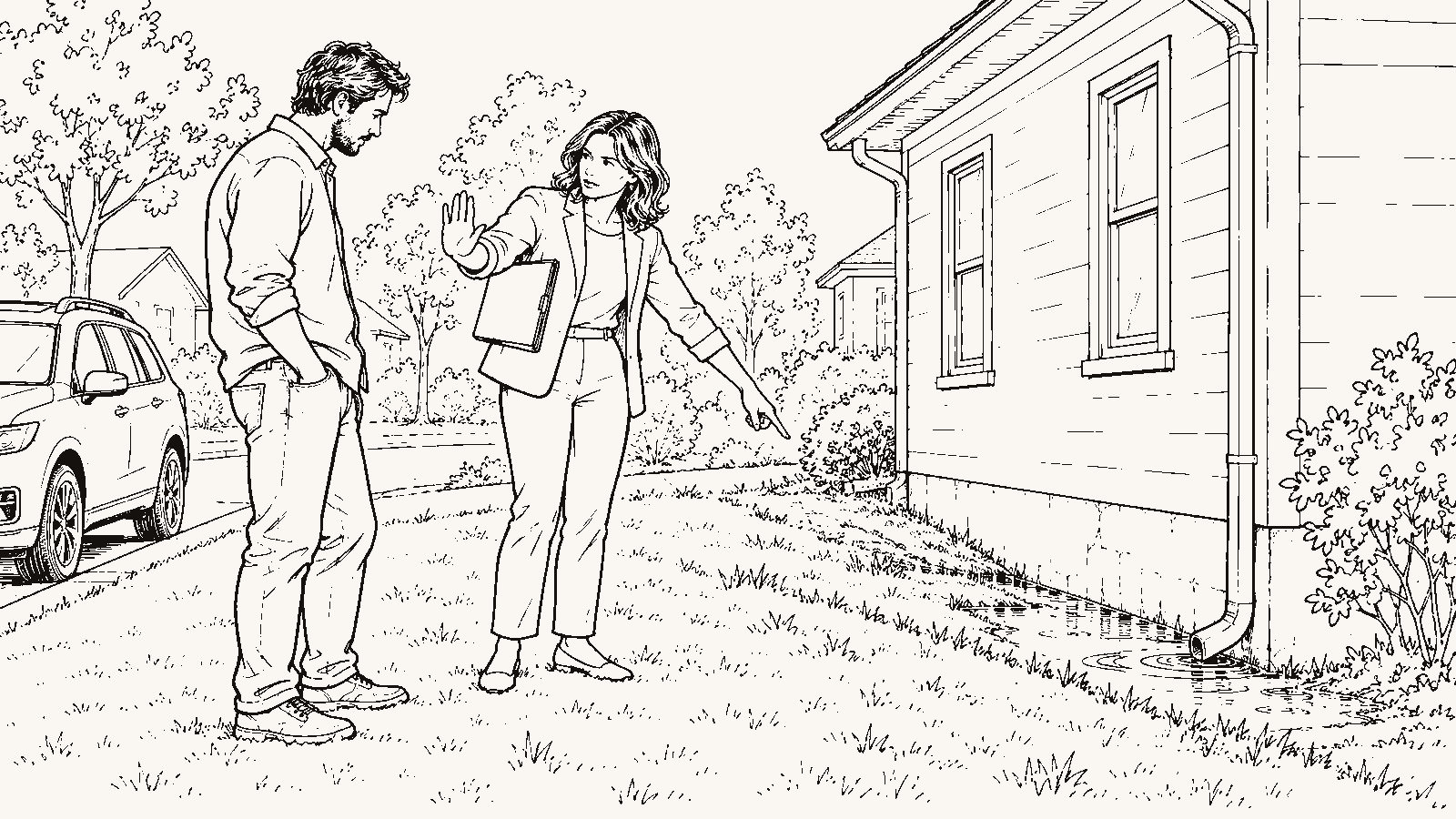
An agent who says “this one is a good fit” about every house has told you nothing. An agent who says “not this one, the lot drains toward the foundation, and here is the permit history for the addition” has given you something you can check.
Why candor counts as a qualification
Licensing tells you the state lets him sell. Closed sales in your target areas tell you he has been where you are going. Neither tells you what he does when he sees a problem in a house you like. Judge that directly, because it is the trait a remote buyer leans on hardest: you will not be there to see the water stain, and your agent will. If you can attend every showing yourself, this trait matters less, because you are the one who sees the stain.
Two sources set the floor. The state licensing regulator keeps the record of his license status and any discipline. ARELLO’s license verification lookup at https://www.arello.com/ points you to it, and your state real estate commission’s own lookup is the primary copy. That record is Official record. If the agent is a Realtor, he has agreed to the National Association of Realtors Code of Ethics, whose Article 2 obligates him to avoid exaggeration, misrepresentation, or concealment of pertinent facts about the property or the transaction; the text is at https://www.nar.realtor/about-nar/governing-documents/the-code-of-ethics. That is the standard he agreed to. Official record of the pledge, though the pledge is an association’s rule rather than a law, and it does not require him to volunteer his opinion of a house. The floor is “does not conceal.” You are hiring for the ceiling: “tells you before you ask.” Checking both records is quick and tells you less than it seems to. A clean license record means the regulator has not disciplined him, which is not the same as nobody having complained, and a signed code of ethics means he agreed to a rule, which is not the same as watching him follow it.
Hiring for candor costs you houses. An agent who names faults will talk you out of a house you already pictured living in, and some of what he flags is his judgment rather than a defect. You pay in weeks of searching and in the discomfort of being disagreed with. The agent who agrees with everything costs you nothing until after closing. You are choosing which bill to pay and when.
What he should tell you not to buy: the house
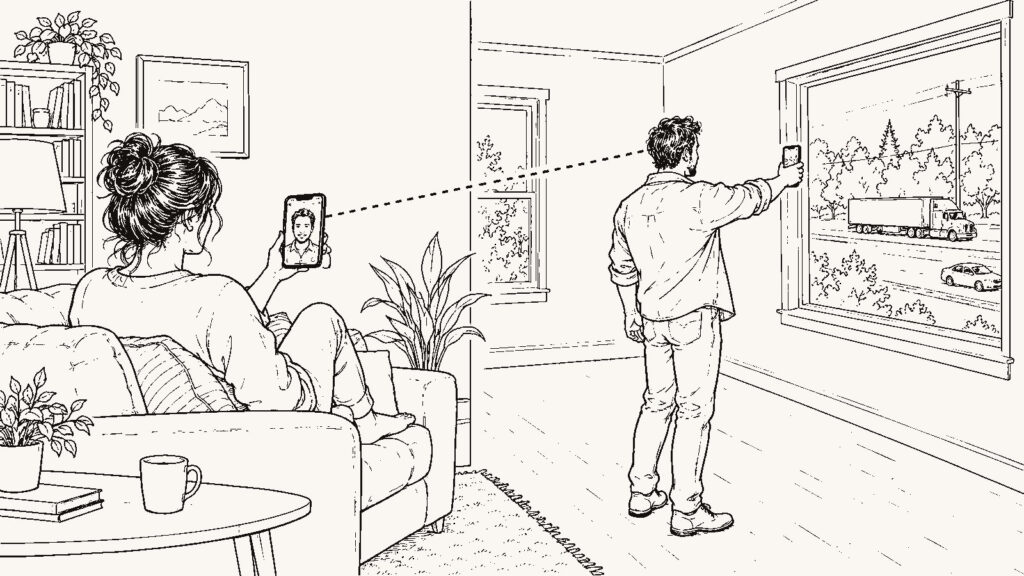
Ask the agent to walk one listing on live video for you and narrate as he goes. A candid agent points the camera at the things listing photography avoids: the ceiling corners, the base of the exterior walls, the slope of the yard toward the house, the age plate on the water heater and the furnace, the electrical panel, the smell in the basement, the neighboring lot. He says “I do not like this” and then says why in a way you can check. “The grade runs toward the foundation” is something an inspector can confirm. Nobody can confirm a great feel. Ask him to walk a house you have already ruled out, and watch whether he finds the fault you found. The tour costs an hour of his time and yours on a house you may never bid on, and an agent who narrates well is still not an inspector; the inspector goes anyway, at your expense.
He names the things he cannot judge and who can. Foundation cracks go to a structural engineer you hire without meeting. The addition on the back goes to the county or city building department, where permit records for the address are Official record; an addition with no permit on file is a fact, and what it means for your insurance and your resale is a question for the insurer and the agent. Every referral is one more person you schedule and pay from another state, and an agent who sends you to four specialists on one house has spent your money to answer a question he could have answered by telling you to skip it.
He tells you when to walk away after the inspection report. You read the inspection report at a kitchen table in another state and cannot tell a cosmetic note from a structural one. A candid agent says “these three items are ordinary, this one is not, and I would not close without a repair or a price change.” That sentence can kill the deal, and the agent knows it. It also costs you the inspection fee and the weeks you spent. The alternative is finding the same item yourself in the first spring.
What he should tell you not to buy: the location
The house is the last decision in the chain. An agent who only talks about the house has skipped the part that decides your Tuesday. Before you tour anything, give him the five places you go most in a normal week and the hour you go, and ask him which of your target areas fail that list. A candid agent says “the road you would take to work backs up from 7:20 to 8:10, and the map does not show it” or “that street is under the approach to the airport.” Those statements are Local observation, one person’s experience, and no listing carries them. Drive the route at 7:40 anyway. It costs you the scouting trip his answer was supposed to save.
He also names what is checkable against a record and sends you there. Flood status for the exact property is on the FEMA Flood Map Service Center at https://msc.fema.gov/portal/home, Official record of the map designation; what the water costs you is the insurer’s quote for that address, which is Provider-reported. Internet at the exact address starts at the FCC National Broadband Map at https://broadbandmap.fcc.gov/, which is Provider-reported, and ends with a call to the provider asking what tier is physically available to that house. School assignment comes from the district’s attendance boundary tool or its enrollment office, which is Official record. The listing’s line about the schools is neither. An agent who says “I think that’s fine” about any of these has given you an Estimate dressed as an answer. An agent who says “look it up here, then call, and tell me what you find” has handed you work. The checking takes your evenings, and it can prove him wrong, which ends a relationship that was otherwise working.
Location warnings tied to your life are worth more than warnings from a checklist. “This neighborhood is 40 minutes from your mother” matters because you told him you drive to her every Sunday. He can only work from your list if you wrote it, which takes an evening you may not want to spend before you have an agent. Spend it.
What he should tell you about his own service
Few agents volunteer what they are not good at. Ask anyway, because for a remote buyer the gaps in his service are the gaps in what you can see from another state. Asking costs you the easy start. Some agents hear these questions as accusations, and the first call turns cold before you have seen a house.
Ask which of your target areas he has not closed in, and who has. An honest answer can send you to a second agent and restart the search. An agent who has closed forty houses across the county and none in your three areas has forty pieces of experience that do not apply to you. Check the addresses he gives you against the county property records, which are Official record, and against the areas you named.
Ask when he is unreachable and who covers, and whether he does the video tours himself or hands them to an assistant. Ask whether he attends the inspection when you cannot, on live video, or sends a partner. None of these answers disqualifies him on its own; a partner who has done twenty remote inspections may serve you better than an agent who has done two. The disqualifier is the agent who says “I am always available” and “I handle everything,” because nobody is and nobody does, and you learn where the seam is on the day the inspector finds something.
Ask what the last house was that he told a buyer to walk away from, and what the buyer did. An agent who cannot name one has either never seen a bad house or never said so. An agent who names one and says the buyer bought it anyway has told you something true about the limits of advice. You cannot check this story. The buyer is a stranger you will never call, so what you learn is how the agent tells it, not whether it happened.
Run the candor test
Put these five prompts to the agent in your first two conversations. Next to each is the shape of an answer you can check and the shape of an answer that only sounds good.
- “Which three active listings in my target areas would you tell me not to buy, and why?” Checkable: three addresses, one reason each, at least one reason that points to a record you can pull. Sounds good: “I would need to see what you like first.”
- “What does this street sound like at 9 on a Friday?” Checkable: a specific answer, or “I do not know, and here is how you find out.” Sounds good: “It’s a quiet area.”
- “Which of my target areas have you not closed in?” Checkable: a name or two, and a referral. Sounds good: “I work the whole metro.”
- “Will you attend the inspection on live video if I cannot be there?” Checkable: yes, or a named partner who will, with the last date he did it. Sounds good: “We’ll figure it out when we get there.”
- “What is the last house you told a buyer to walk away from?” Checkable: an address or a street, a reason, and what happened. Sounds good: “I always look out for my clients.”
Then ask for the written list from prompt one before any tour, and run each reason to its source: the FEMA map for flood, the permit records for the addition, the FCC map and a provider call for internet, the district boundary tool for the school, and the drive at 7:40 for the commute. An agent whose reasons survive the record has passed a test you can rerun on the next agent. An agent whose reasons do not survive it is either guessing or steering, and you cannot tell which from another state.
The test has a cost. It takes two conversations and several hours of your checking before you have toured a single house, and an agent with a full calendar may decline to work this way. A decline is an answer. It also needs your target areas named first; put to an agent about a whole metro, prompt one has no answer. And it has a limit: an agent who says no to everything has stopped working for you, whatever it sounds like. The difference between the two is whether the “no” comes with a reason you can go check.
The candor test is one part of a longer interview. What to Ask a Realtor When You Are Relocating covers the questions that test relocation experience, and Why “Top Producer” Does Not Automatically Mean “Right Relocation Agent” explains why sales volume does not answer the question you are asking. Once you have the agent, Buying From Out of State: What Your Local Eyes Need to Check sets the standard for what a video tour has to show.
What must I verify personally
- Look up the agent’s license status and any discipline through your state real estate commission, reached through https://www.arello.com/, before the second call. Official record.
- Ask for closed sales in the specific target areas and check three of the addresses against the county property records. Official record.
- Take every “do not buy” reason the agent gives you to its source: the FEMA Flood Map Service Center for the property, the building department’s permit records for any addition, the FCC National Broadband Map plus a call to the provider for internet, the district’s attendance boundary tool for the assigned school. Official record and Provider-reported, as noted above.
- Drive one of the agent’s “no” locations at 7:40 on a weekday, both directions. Stand in the backyard of one of them at 9 on a Friday. Personal verification.
- Get an insurer’s quote for a house the agent flagged and one he did not, at the exact addresses. Provider-reported.
- Attend one inspection by live video and note whether the agent points at anything the inspector did not. Personal verification.
What should I ask a local
- What do the people who live on this street complain about?
- Which houses on this block have sold twice in three years, and why?
- What does the agent everyone here recommends tell buyers not to buy in this area?
What should I ask my agent
- Which three listings in my target areas would you tell me not to buy, and why?
- Which of these areas have you not closed in, and who has?
- When are you unreachable, and who covers?
- Will you attend the inspection on live video when I cannot?
- What is the last house you told a buyer to walk away from, and what did the buyer do?