Before The Key · The method, published in full

The Right Move Process

Five stages. Life first. House last. Because the location is the part you can’t change later.

Every stage below carries the reason it exists and what breaks without it. We publish the whole process because the sequence is not the scarce part.

Call and ask a local, or send the question in writing. Either way a person who lives here answers it.

What you’ve already tried

You’ve looked. That’s not the problem.

The search so far

You’ve spent weeks on Zillow. You’ve read the “best neighborhoods” articles, checked the school ratings, compared the Walk Scores. You’ve probably found three or four houses you could see yourself in.

And you still can’t answer the question that actually keeps you up.

That is not a failure of effort. 77% of people say there is no single reliable source for this.

You haven’t been looking wrong. What you are looking for is not published anywhere.

The root cause

Those tools answer the house question. Nobody answers the life question, because the problem was never a shortage of information.

The problem is meaning. A website can tell you: Walk Score 72, downtown 24 minutes, eight parks, four grocery stores. The question that stays unanswered is what those numbers mean for the way you actually live.

Adding more data to a meaning problem never resolves it.

The part nobody tells you

The map lies to people who have never lived here. Six miles up the mountain is twenty-five minutes. Two miles across the river at five o’clock is worse than it looks.

A website will tell you both of those are close. Both are wrong, and people find out after they have signed.

You can see every house on the market and still not picture a single ordinary Tuesday in any of them. That is the gap.

Two approaches

Nearly every real estate site starts with the house. This starts with the life.

The typical approach

Start with listings. Treat location as a filter. Show you scores and ratings attached to the listing. Hope the life works out after you move in.

36% of relocators say they would choose a different neighborhood. Among those who moved into a city, 46%.

The Right Move Process

Start with your life. Build the search around how you actually live. Decide the location first, from your week. Show you both halves of every tradeoff. Then show you houses inside the area you settled on.

The area is decided before you tour a single home.

The order is the whole thing.

The five stages

Every stage carries the reason it exists.

Because this audience has heard “trust the process” before and stopped believing it.

Stage one

Tell us how you live.

Before any talk of houses, we capture the life. Why you are moving. What your ordinary week looks like. The five places besides home you have to get to.

What can’t move: a job downtown, someone working from home, a school, weekly flights. How long a daily drive you’ll tolerate before your day is ruined. What you refuse to give up, and what you could live without.

Why this stage exists

Because what people ask for is never quite what they need. “I want a thirty-minute commute” means protect my evenings. “I want restaurants nearby” means do not strand me. If we build on the surface request, we solve the wrong problem.

Why it is first

Because everything downstream is scored against these answers. Without the life, there is nothing to score against, and the ranking would be arbitrary. That is exactly what every “best neighborhoods” list already is.

The one question that carries the most weight
Besides home, what are the five places or types of places that shape your normal week?

That single question tells us more about where you should live than fifty house filters.

Stage two

We read the map you can’t.

We turn your life into geography. Every candidate area gets tested against your five places and your driving limit. Any area that would make your real weekly trips worse is out, no matter how good it looks online. The same test runs on any home you already have your eye on.

Why this stage exists

Because the map lies to people who have never lived here. Six miles up the mountain is twenty-five minutes. Two miles across the river at five o’clock is worse than it looks. People find out after they have signed.

Why you can’t do this yourself

It isn’t complicated. It requires knowing how a place actually lives, and that only comes from being here. You can read every statistic published about this city and still not know which fifteen-minute drive is really thirty on a Tuesday.

How conflicts get resolved

Against the reason for the move. If someone won’t give up a yard but also swore they would never drive more than twenty-five minutes, and this city can’t give them both, we go back to what this move is supposed to fix.

Someone moving to protect family time resolves that collision differently than someone moving for room to breathe. The purpose is the tiebreaker, every time.

Stage three

The areas that match your life, and what a local tells you about each.

You get the areas that match your life, not a list of every neighborhood with a good reputation. For each one: what you gain, what it costs you, and what you should go verify yourself.

If you have already found homes you like, send them. Each one is tested against the same week, and you hear how it fits before you tour it.

Why a short list

Because you don’t have a shortage of options. You have too many. What you are missing is someone to eliminate the ones that don’t fit. Narrowing is the product.

Why both sides

Because no place is perfect, and what you are actually choosing is which tradeoff you can live with. More house for the money means more driving. A shorter commute costs more. Walkability means less private space.

Every real estate site sells you the good half of that sentence. We give you both halves, before you sign, because you can’t weigh a tradeoff you were never shown.

Why we test the homes you send us

Because you probably have a few saved already, and a house you love in an area that fails your week is the most expensive mistake on this page. The house gets the same treatment as the area: what it gives you, what it costs you, and what to verify before you go see it.

Why we tell you what to check yourself

Because you shouldn’t take our word for the parts you can confirm on your own. And because a company willing to point at the limits of its own answer is telling you the truth about the rest of it.

Inside the brief

Eight sections, each one written for the week you described.

Every area you receive follows this structure, because a relocator’s question is never “what is this place like?” It is “what would my life be like here?”

Monday morning

What time your alarm goes off from here. Which road you take, what it does at the hour you’d actually drive it, and what the commute costs in evening hours on the other end.

Tuesday night

What the evening looks like after the commute. Whether pickup works. Whether the grocery run is one trip or two. How much of the night is left when you walk in the door.

Saturday morning

Where your weekend would happen from here. The market, the trail, the coffee shop, the rec center, and how far each one is.

Getting away

The airport, and what that drive is really like. Weekend trips: what’s within two hours, what’s within four.

Living here

The grocery store, the gym, the doctor, the vet. Where they are, how far, and whether they’re all in the same direction or three separate trips.

Weather in behavior

How many months of the year you would realistically live the lifestyle you are moving for. What the heat, the cold, or the rain does to the routine you described.

You gain / You give up

Both halves of the tradeoff, stated in one place. Every area has a sacrifice. If we haven’t named it, we haven’t done our job.

Who should look more closely, and who this area is not right for

A plain statement of the kind of week this area fits and the kind it doesn’t. We’d rather you know that now than in month three.

Every area also ends with a list of what you should go verify yourself, from official sources, before you decide anything.

The brief is worth reading on its own. It is also deliberately unfinished, because the verified answer is what the conversation is for.

Stage four

We get on the phone and tell you what you couldn’t find.

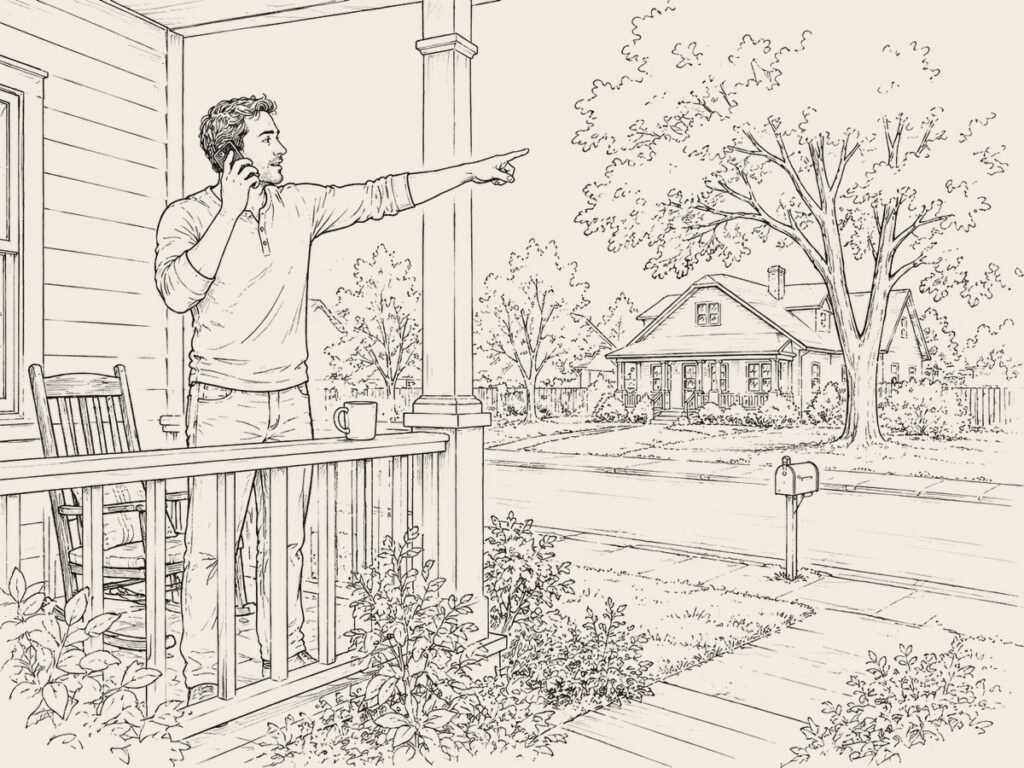
A real conversation where you hear what no website holds. What that road is like at five o’clock. Where your life would actually happen day to day.

Why this stage exists

Because technology can gather facts and only a person who lives here can tell you what they mean.

Why a person and not software

Because you are making one of the largest and least reversible decisions of your life, often about a place you can’t visit repeatedly first. 88% of buyers still purchase through an agent.

The interpretation is the value, and interpretation is a human act.

Stage five

Now the houses.

The area is settled. Now we show you homes inside it, and you already know how the ones you found on your own hold up.

Why last

Because getting the place right makes the house decision straightforward, and getting the place wrong means no house can fix it.

You can renovate a kitchen. You can’t move the house.

The order

Every step exists to make sure the permanent decision gets made with real information, and the reversible one gets made last.

The ordinary path
  1. Listings
  2. Houses
  3. Tours
  4. Neighborhood
  5. Decision
The Right Move Process
  1. Your Life
  2. Your Areas
  3. The Tradeoffs
  4. Local Answers
  5. The House
House first

You find a house. You check the neighborhood page. You tell yourself twenty-four minutes is fine. You move in.

In month three you learn that twenty-four minutes is forty on a Tuesday. The grocery run takes two trips. The outdoor life you moved for is practical four months of the year.

Life first

You describe your week. We test every candidate area against it. You see which tradeoffs each area asks you to make before you tour a single home.

Month three holds nothing you hadn’t already weighed.

Move the house to the front and you are back to guessing about the only part that is permanent.

What we commit to before you start

  • We ask about your week and the places you need to reach. Every client receives the same objective information, and you set the priorities yourself.
  • Every area arrives with both halves stated: what you gain, and what you give up.
  • Every area names who it is not right for.
  • Send us a home you like and we tell you how it fits your week before you tour it.
  • We give you real safety context from official sources, on the same terms for every client, at a time when the portals have taken it off the listing.
  • We name what you should go verify in person, because you shouldn’t take our word for the parts you can confirm yourself.
  • No countdowns, no scarcity, and no deadline that isn’t real.
  • Houses come last, in every conversation and every intake.

We build the search around the life you are moving for, every time. That means every time. Nobody can promise you a specific house or a specific market outcome. “Every time” stays attached to the life, which the process controls. It never means a guaranteed house.

We publish the entire process because the method is not what’s scarce.

Every stage, the order, the conflict-resolution rule, the eight sections inside each area, and the commitments above are on this page for anyone to read.

You could study every step and still not run it, because you can’t see the road at five o’clock from where you are sitting.

The sequence is not the rare part. Living here is.

The knowledge that makes each stage produce the right output for you is local, current, and held by a person who drives these roads.

A process without that knowledge is a checklist. With it, it’s the reason this works every time.

Start with your week. We’ll narrow the city.

The Relocation Brief is one or two pages. It comes back with the areas that match your life, what a local tells you about each one, and exactly what to go verify before you decide.

  • What this move is trying to solve
  • Your non-negotiables
  • The daily-life anchors in your normal week
  • The longest drive you will actually make
  • The areas that match your life
  • Why each one fits
  • What each one compromises
  • Any homes you have already found, and how each one fits
  • What to verify next

The brief stops at “what to verify next” on purpose. It is worth reading on its own. The verified answer is what the conversation is for.

Call and ask a local, or send the question in writing. Either way a person who lives here answers it.